

Hakuba Valley's 10 Resorts: A Quick Resort-By-Resort Guide
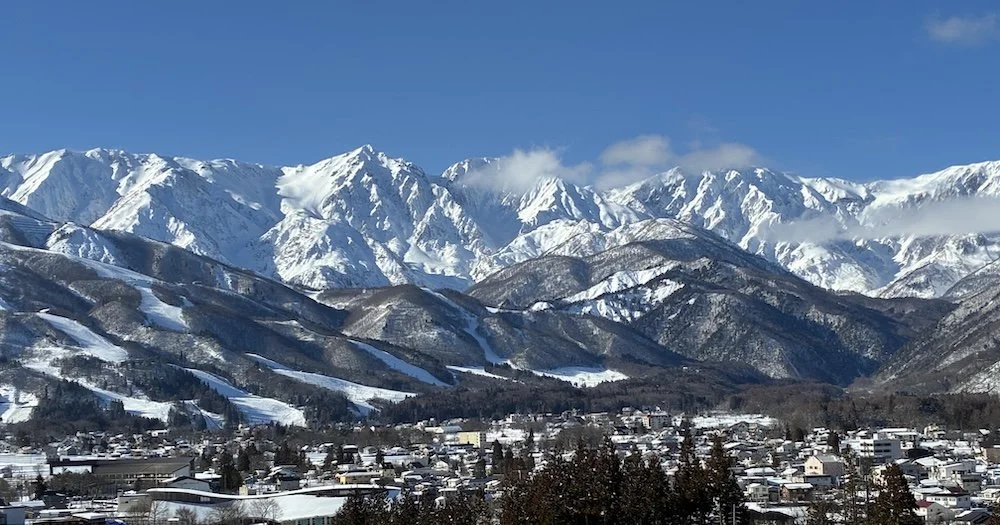
In the mountains of Nagano Prefecture at the base of the Northern Japanese Alps, Hakuba Valley is a long alpine valley that’s home to 10 ski areas, over 200 runs, and some of the deepest, driest powder and most spectacular mountains in Japan. Host of the 1998 Winter Olympics, Hakuba offers terrain for every level across 10 resorts that are all unique – from wide beginner slopes to steep alpine descents and deep tree runs. Here's a quick rundown of each resort to help you plan your trip.
HAPPO-ONE
The largest and most iconic resort in the valley. Known for its steep terrain, long vertical drop, and Olympic downhill heritage, Happo-One is best suited to intermediate and advanced riders. Happo-One actually translates as ‘8 ridges’ – and off those 8 ridges is a lot of terrain to explore. There’s long groomers, world class bump runs, good tree riding, a free-ride zone called Omusubi (names because it looks like a large onigiri), and access to world famous consequential backcountry terrain. It sits at the heart of Hakuba, right next to Happo and not far from Echoland, with the widest range of accommodation, dining, and nightlife nearby.
For beginners: Head to the Nakiyama or Sakka areas at the base of Happo-One for short beginner runs. The only green runs off the gondola are cat tracks and return trails.
For intermediates: There’s a lot to explore, from top to bottom. Most of Happo are various levels of intermediate terrain. Even the advanced runs are more like challenging intermediate runs. Head up the gondola and follow your instincts.
For advanced: Above the gondola is the place to be, on the Alpen, Grat and Kurobishi chairs. If you seek, you’ll find interesting terrain all over the place
For powderhounds: Omusubi freeride area and the ungroomed Tenbo course are the places to go on a powder day. The edges of the Grat quad area often ungroomed, too. Reminder, the backcountry of Happo is serious, so don’t go without knowledge and experience
HAKUBA 47 WINTER SPORTS PARK
47 is the go-to resort for freestyle skiers and snowboarders, as its known as having some of the best terrain park features in Japan, with jumps, rails, and lines for all abilities. These features bring some high quality riders, too, so it’s great for spectating. Hakuba 47 also has some fun tree-riding, both within its designated tree zones and some other areas that require some more exlporing to get to. At 47, you’ll find some long groomers, and playful terrain, too. It's directly connected to Goryu via shared lifts, and has a lively, fun atmosphere.
For beginners: One of the great things about 47 is that you can ride a long beginner run from top to bottom. Part of it is wide and groomed and occasionally it is a cat track, but it is a mellow run with beautiful scenery. On a clear day, ride the beginner runs up top on Alps first and Line E chairs for incredible views/
For intermediates: Hakuba 47 is intermediate bliss, especially if you like playful terrain. There’s plenty of cruisey terrain, and route 1 off the Line C Quad is a classic long groomer.
For advanced: There’s fun, steeper terrain towards the northern end of 47. Look for route 2 and route 3. Great pitch. Awesome on a powder day. Bumped up after a dry period (if that’s your style).
For powderhounds: Hakuba 47 is pretty strict about ducking ropes. You’ll see the occasional track under the Line C chair, and you can bet that person lost their pass. So, the best way is to ride in sanctioned areas. This is fine because they are a lot of fun. Look for TRZ (Tree Riding Zone) on the trail map, but don’t forget your armband to show you’ve seen the safety briefing.
HAKUBA GORYU
Famous Goryu has a bit for everyone, offering wide groomers, steeper upper-mountain terrain, an ungroomed zone called the ‘adventure course’, access to some serious backcountry and beginner-friendly lower slopes. Down on these lower slopes you’ll find Goryu Waves, a super fun ‘surf’ styled terrain park. And almost every night in winter you can keep the good times sliding with naita, that’s night skiing or snowboarding. Combined with Hakuba 47, Goryu makes for varied riding suited to mixed-ability groups and families.
For beginners: The bottom of Goryu is where it is at. Wide, gentle beginner runs that are even lit up at night.
For intermediates: The upper areas of Goryu has a bunch of red runs, which have nice pitch and often hold good snow. You can also cruise across to 47 for even more variety, as the two areas are linked.
For advanced: The Champion expert course is for you, along with the ungroomed adventure course.
For powderhounds: short but steep and sweet, the dedicated Kamishiro tree area is the go off the side of the champion course. Alternatively, the ungroomed adventure course is a hoot along a steep ridgeline.
TSUGAIKE KOGEN
The best resort in the valley for beginners and families, with wide, gentle groomed slopes. Talk to any instructor in the area and they will laud Tsugaike for its perfect terrain for progression. It’s a mountain with wide groomers at the bottom, progressively getting steeper and steeper as you travel up the mountain – perfect for beginners who want to progress. Tsugaike also has wonderful tree terrain in the Tsugapow DBD zone, and features key backcountry access points into some legendary backcountry terrain for those with the skills to go chasing deeper, wilder snow.
For beginners: As mentioned, the entire area at the bottom of Tsugaike features long, wide runs for beginners. Practice your skills here and when you’re ready, go a little higher to progressively steeper terrain.
For intermediates: Go to the top and have at it, there’s intermediate terrain everywhere at Tsugaike. The runs are long, so there’s plenty of vertical for turns.
For advanced: From the very top of the Tsuga No 2 pair lift, you can run a big long advanced piste all the way back to the gondola mid station. Where Tsugaike shines for advanced riders is in its tree areas and backcountry.
For powderhounds: Tsugapow DBD is very popular, and a lot of fun. It’s accessed off the Tsuga No 2 pair lift and provides a mix of mellow, nicely open trees to some steep, deep, gullied terrain. Don’t forget to watch the video and register for an armband for access
HAKUBA IWATAKE
Sitting between Happo-One and Tsugaike, Iwatake is a smaller, laid-back resort popular with families, beginners, snow players and sightseeers (on a clear day, the mountain harbour is a must see, with incredible views across the alps). Iwatake has a lot of beginner and intermediate terrain, but there are steeper sections too. When the snow is storming and other areas are closed due to weather, Iwatake can be a surprisingly fun powder snow mountain. With a gondola base area that includes non-ski attractions and mountain views, Iwatake is a good choice for a quieter day on the slopes.
For beginners: Iwatake is a beginners paradise. Lots of mellow runs on all aspects, with the option to challenge yourself if you wish. The facilities are great and there are many things you can do other than skiing, if you need a rest, too.
For intermediates: There’s plenty of intermediate riding at Iwatake. Most of the mountain is beginner to intermediate, with some steeper stuff on the front side back to the base area.
For advanced: While it is lower in elevation and not known as a hardcore place, Iwatake offers more challenging terrain down the front side of the mountain towards the base area. When it’s snowing a lot, Iwatake can be a lot of fun.
For powderhounds: Off View 2 chair, mellow and short but fun tree riding can be found. Due to aspect, this area can be sun effected but in the trees you can find fresh tracks that last for days. Remember, it’s about quality of turns, not quantity, and while this area is small and short, it’s a pleasure.
HAKUBA CORTINA
Cortina is a powder-hunter and a tree rider’s favourite. A relatively small resort in area, Cortina’s terrain is shaped like a bowl that catches heavy snowfall. Plus, being situated at the northern end of the valley helps Cortina accumulate deep snowpacks. It's one of the few resorts in the valley that openly allows tree skiing – in fact there are very few areas that are roped off at Cortina. However, many of these are self responsibility areas so you should take care. Apart from one wide green run for beginners down the middle of the bowl, Cortina is best suited to strong intermediate and advanced riders looking for deep, technical tree-riding terrain.
For beginners: If you have mixed abilities in your group the beginners can cruise the easy to navigate beginner runs while the pow chasers ride the trees. Meet at the onsen at the end of the day to trade tales.
For intermediates: Apart from the middle of the valley, Cortina is mainly intermediate on the pistes. Being more freeride focussed, you’ll find the terrain variable and playful.
For advanced: If you’re the kind of advanced rider that is all about riding steep pistes and ducking off into trees, trees, trees, the skiier’s right side is for you. From here there is also a fun run linking across to Norikura that is a nice open face and has pitch.
For powderhounds: Well, it’s Cortina, the hero of Hakuba tree riding. The entire place is wide open for this (apart from when they rope off for avalanches and glide cracks, so look out for that) and the trees are generally steep, with gullied exits and plenty of drops and hits. Different areas have different tree spacing and some areas can be a bit too bushy, but follow your nose and you’ll find the goods.
HAKUBA NORIKURA ONSEN
Norikura, or Hakunori, is known as a quiet, traditional Japanese ski resort ideal for families and those avoiding crowds. It has a range of terrain, from mellower beginner terrain at the base to fun, steeper, varied terrain higher up the mountain. A new chair at Norikura also opens the mountain up to backcountry tree-riding access, but this is only for the experienced. Linked to Cortina, Norikura combines gentle lower slopes with more adventurous upper-mountain terrain, plus access to a hot spring (onsen) for apre ski recovery.
For beginners: Stay low at Norikura and you can enjoy an expansive beginner area all to yourself. It’s rarely busy here, so it’s a great spot to slide without the crowds.
For intermediates: Norikura’s varied terrain is fun for intermediates. Just about every lift has an intermediate option running off it, so it’s a fun resort to explore without worrying about accidentally traipsing onto a run that’s too challenging.
For advanced: The Alps No 10 lift (linked with Cortina) is the go for a big broad face that has decent pitch. It’s great on a powder day.
For powderhounds: No 10 is the go, but expect queues on a sunny day when the storm clears. If you’re experienced in BC, the fairly new No 11 pair lift accesses some incredibly terrain (some calling it the best lifted terrain in the area), but it’s only for those well-prepared. Technically outside of the resort, think of it as a sightseeing chair that accesses wild tree slopes with terrain traps, avalanche potential, cracks and holes a plenty.
White Resort Hakuba Sanosaka
‘Sano’ is one that is off the radar from the powderhound chasing the higher profile resorts in Hakuba. It is a compact, local resort with a more traditional Japanese ski-hill feel. Like Iwatake, it is ideal for cruisier, relaxing day. Pair the chill vibes with a sunny day, and you’ll lover riding Sano with views over Lake Aoki and beautiful forests. Far less crowded than the valley's bigger names, Sano is a solid option for a relaxed day away from the tourist crowds and an authentic local experience.
For beginners: If you’re an upper beginner who learning and want to enjoy the views, Sanosaka is it. The two or so green runs are mellow and even the intermediate terrain isn’t too daunting. It’s a great experience skiing with forest views and the vistas of Lake Aoki.
For intermediates: Most of Sano is upper beginner to intermediate, so the whole mountain is yours to enjoy. It’s a place for cruising, rather than ripping, and taking in the scenery.
For advanced: Not much to report here. There are a couple of pitchier pistes but as mentioned Sano is for a down day. If you’re happy working on technique while looking over nature, then a day or even a few hours at Sano on your down day is worth it.
For powderhounds: To be frank, Sano is a groomed area with pistes and it doesn’t get as much snow as other areas of the valley. There’s not much here for the powderhound but if it’s snowing and you’re sliding, then it’s always a good place to be.
Kashimayari
‘Kashi’ is a smaller, low-key resort offering a quieter alternative to the busier parts of the valley, just like Sanosaka. The offering here is distinctly Japanese – a handful of chairlifts rise up in a number of directions from a central base lodge (with a delicious katsu curry). Kashi is good for skiers who want fewer crowds and a more local experience. In big winters when it’s storming and the base is high, Kashi is also a lot of fun when the weather is a bit too wild up the other end of the valley. You’ll find some steep pistes and trees here and not many other riders competing for powder.
For beginners: Kashi has an even mix of beginner and intermediate trails. And from the main central area up on the mountain, all runs are basically visible, so pick your lift and go.
For intermediates: There are some fun, longer intermediate trails on this mountain in basically every direction you can go. When the snow is good, the long trail from the top all the way to the base area is fun.
For advanced: Sadly, Kashi lost its top lift that accessed some of the better terrain including a black run or two. There are still a couple of short, sweet black runs opposite this. If you like steeper runs and moguls (or powder covered moguls) Kashi can be a blast.
For powderhounds: As mentioned, once upon a time Kashi had a top lift that tapped into fun tree terrain. Today, you can skin it. there’s also some other fun riding on the mountain – Kashi rewards those willing to seek, especially when it’s snowing heavily.
JiIgatake
This is the smallest resort in the valley, with a relaxed, community feel. Jiigatake is your classic local Japanese hill. In fact, it is the local town of Omachi’s go-to hill. All across Japan, most snow country towns and villages had their own local hill, and Jiigatake survives as Omachi’s. Jiigatake is a good option for beginners or families staying nearby who want to see more of authentic Japan away from other international travellers.
For beginners and intermediates: With an official rating of 70% beginner and 30% intermediate, Jiigatake’s entire terrain is for you. Perfect for a low-key family day skiing in an authentic little local ski hill.
For advanced and powderhounds: Jiigatake is probably not going to do much for you, sorry! But, if you’re looking for an authentic local experience away from the crowds, drive south to Jiigatake from Hakuba.
Getting Around THE Hakuba Valley
All 10 resorts are connected by the Hakuba Valley shuttle bus network, but keep in mind that these buses get busy and can be packed at peak times. Most visitors base themselves in Happo, Wadano, or Echoland for the best access to lifts, restaurants, and transport, while those prioritizing specific resorts like Goryu/47, Tsugaike, or Cortina may prefer to stay closer to those areas. With your own Hakuba car rental from Hakucar, you can stay in any area, and see more of the Hakuba Valley, and visit all of these resorts with ease.